
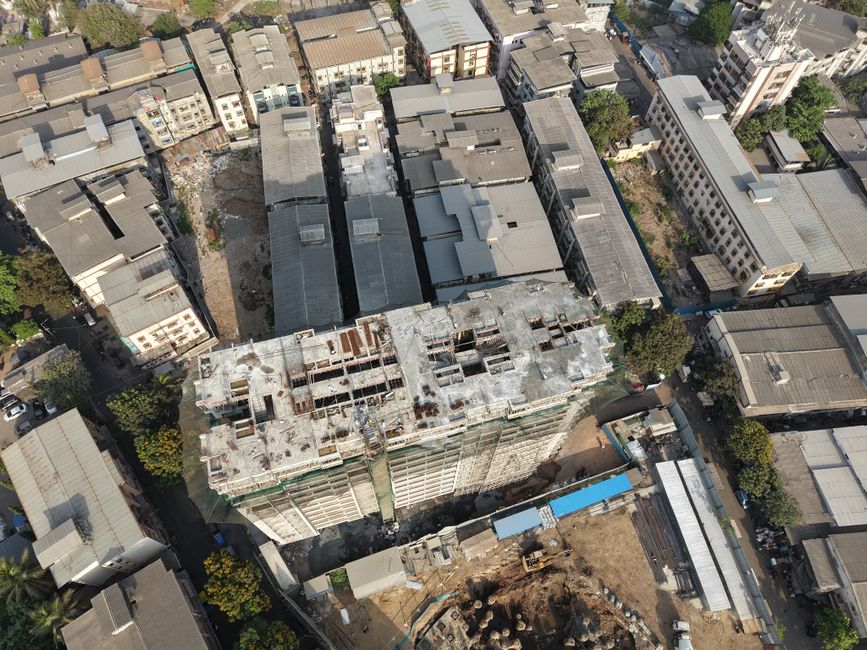
Palghar has quietly evolved from a sleepy coastal district north of Mumbai into one of Maharashtra’s most watched real estate corridors. With the Mumbai-Ahmedabad High Speed Rail, the Delhi-Mumbai Industrial Corridor, and the proposed Vadhvan Port all converging in this region, Non-Resident Indians (NRIs) are paying close attention. If you’re considering property investment in Palghar, understanding the legal framework before you wire funds is not optional — it’s essential.
What FEMA Says About NRI Property Purchases in India
The Foreign Exchange Management Act (FEMA), administered by the Reserve Bank of India, is the primary law governing how NRIs buy and hold property in India. The good news is that NRIs and Persons of Indian Origin (PIOs) holding a valid Indian passport — or an OCI card — do not need prior RBI approval to purchase most types of immovable property in India.
However, FEMA draws a clear line on what you can and cannot buy:
Permitted property types for NRIs:
– Residential apartments and independent houses
– Commercial properties such as offices, shops, and commercial plots
– Under-construction projects from RERA-registered developers
Restricted property types:
– Agricultural land
– Plantation property
– Farmhouses
These restrictions apply regardless of where the property is located in India, including Palghar. If you come across listings in Palghar for agricultural land marketed to NRIs, treat that as a red flag. The only way an NRI can legally acquire agricultural land is through inheritance or as a gift from a resident Indian who owned it lawfully. For a comprehensive overview of the current regulations, the Reserve Bank of India’s Master Direction on Acquisition and Transfer of Immovable Property is the authoritative reference.
Payment rules matter too. Under FEMA, NRIs must fund their Indian property purchases through:
– Inward remittances via normal banking channels
– Funds held in an NRE (Non-Resident External), NRO (Non-Resident Ordinary), or FCNR (Foreign Currency Non-Resident) account
Payment in foreign currency directly — or through a third party — is not permitted. Keep all transaction records because these will be required when you eventually repatriate funds.
Why Palghar Specifically?
Palghar district spans over 5,000 sq km and includes a varied landscape: coastal towns like Dahanu and Boisar, industrial zones near Tarapur, and rapidly developing urban pockets close to the upcoming Virar-Alibaug Multimodal Corridor. Property investment in Palghar appeals to NRIs for several reasons — land is significantly more affordable than in Mumbai or Thane, infrastructure spending is accelerating, and rental demand from industrial workers is creating a secondary income opportunity for landlords.
Repatriation of Funds: Getting Your Money Back
Buying property is one equation. Selling it and moving money abroad is another. Repatriation rules are where many NRI investors get tripped up, so this section deserves careful attention.
If you bought with NRE or FCNR funds:
You can repatriate the sale proceeds abroad, subject to a ceiling. Currently, the RBI permits repatriation of up to two residential properties over an NRI’s lifetime. The amount repatriated cannot exceed the original purchase price paid in foreign currency or the equivalent amount remitted through banking channels.
If you bought with NRO funds:
Repatriation is capped at USD 1 million per financial year (net of applicable taxes). You will need a Chartered Accountant’s certificate (Form 15CB) and an RBI Form A2 submission through your bank before the funds can be transferred abroad.
Tax deductions before repatriation:
Long-term capital gains (on property held over 24 months) are taxed at 12.5% without indexation benefits as of the latest Finance Act amendments. Short-term capital gains are added to your income and taxed at your applicable slab rate. Crucially, the buyer of your property in India is legally required to deduct TDS at 20% (plus surcharge and cess for higher-value transactions) before making payment to an NRI seller. You can claim a refund on excess TDS by filing an Indian income tax return.
For detailed TDS computation rules applicable to NRI property sales, the Income Tax Department of India provides updated rate charts and compliance forms.
Practical Tips for a Clean Transaction
– Engage a local RERA-registered agent familiar with Palghar’s micro-markets. Boisar, Manor, and Palghar town itself have different price dynamics.
– Verify land records through the Maharashtra government’s Mahabhulekh portal before signing anything. Tribal land restrictions (under the Maharashtra Land Revenue Code for Scheduled Tribe areas) affect significant portions of Palghar district — another reason due diligence here is non-negotiable.
– Use a Power of Attorney sparingly. If you cannot be present for registration, a notarised and apostilled PoA from your country of residence is accepted, but it must be carefully drafted to limit the scope of authority.
– Open an NRE account with an Indian bank before initiating any purchase. Keeping funds clearly traceable from a foreign source simplifies future repatriation immensely.
Property investment in Palghar carries genuine long-term upside, but only for buyers who structure their transactions correctly from day one.
Frequently Asked Questions
Can an NRI buy a plot of land in Palghar?
Yes, NRIs can buy non-agricultural residential or commercial plots in Palghar without RBI approval. Agricultural land, plantation land, and farmhouses remain off-limits under FEMA unless acquired by inheritance.
Do NRIs need a special bank account to buy property in India?
NRIs are strongly advised to use an NRE or FCNR account for property purchases, as these allow full repatriation of principal and interest. An NRO account can also be used, but repatriation from it is subject to the USD 1 million annual cap and additional compliance steps.
How many properties can an NRI own in India?
There is no legal cap on the number of residential or commercial properties an NRI can own in India. However, the repatriation benefit of freely transferring sale proceeds abroad is limited to two residential properties over a lifetime.
Is TDS mandatory when an NRI sells property in Palghar?
Yes. Under Section 195 of the Income Tax Act, the buyer must deduct TDS from the payment made to an NRI seller — typically 20% plus surcharge and cess for long-term capital gains. The NRI can file an income tax return in India to claim any refund on excess TDS deducted.
What is the stamp duty for NRIs buying property in Maharashtra?
NRIs pay the same stamp duty as resident Indians. In Palghar district, stamp duty is currently 6% of the agreement value (5% stamp duty plus 1% metro cess), plus a 1% registration fee. These rates are subject to periodic revision by the Maharashtra government.
Are there tribal land restrictions NRIs should know about in Palghar?
Yes. Parts of Palghar district fall under Scheduled Tribe land protection provisions of the Maharashtra Land Revenue Code. Such land cannot be sold to non-tribal buyers without government permission. Always verify the land’s classification through Mahabhulekh and consult a local property lawyer before proceeding.